When Love Isn’t the Problem: Understanding Mismatched Values in Relationships
Most couples who come into my office aren’t there because they don’t love each other. They’re there because something keeps going wrong, and they can’t seem to stop it.
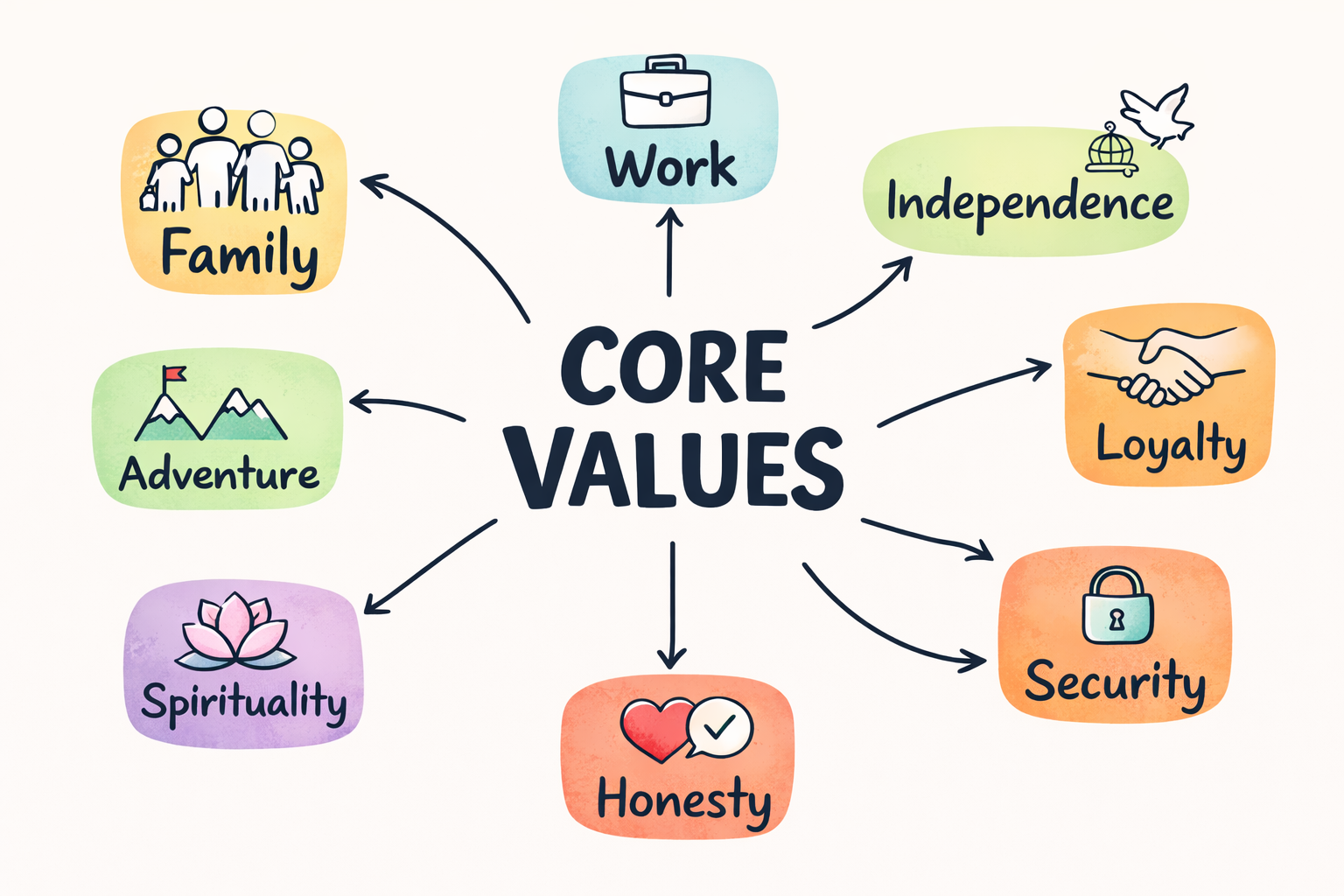
Through a Relational Life Therapy lens, I tend to see two things underneath the surface: mismatched patterns and mismatched values.
Love can be strong.
Chemistry can be real.
But when values don’t align, resentment quietly builds.
The Pattern Problem: When Coping Styles Collide
We all learned how to “do” relationships somewhere. Usually early. Usually without realizing it.
Maybe you learned that love means:
Staying close
Talking it out immediately
Fixing conflict as soon as possible
Maybe your partner learned that love means:
Giving space
Not making a fuss
Handling things independently
Both strategies make sense in context and they’ve likely helped you once. But put those two people together and it can get painful fast.
One partner pushes for connection.
The other pulls back to regulate.
The more one pursues, the more the other distances.
Both end up feeling hurt and misunderstood.
Without awareness, couples assume the problem is personality. Often, it’s just two protective systems clashing.
In Relational Life Therapy, we’d call that your “adaptive child” running the show. It’s the protective, younger part of you trying to keep you safe. The work is helping each partner step into their adult self, the part that can tolerate discomfort, take accountability, and choose something different.
The Values Gap: The Quiet Source of Resentment
Patterns are emotional. Values are quieter, but just as powerful.
I see couples who are attracted to each other but operating from totally different assumptions about what partnership should look like.
For example:
Is the relationship the top priority, or is work?
Is emotional transparency essential, or is privacy important?
Is conflict something to lean into, or something to avoid?
Is independence a strength, or a sign of disconnection?
These differences don’t always show up on a first date. They show up three years in, when someone feels chronically alone or chronically criticized.
A lot of resentment grows from unspoken expectations. Each person assumes their version of partnership is obvious. When their partner doesn’t live by that internal script, it feels personal.
But often, it’s not malice. It's a misalignment. Clarity reduces resentment. Assumptions create it.
Why Mismatched Values Feel So Personal
When your partner doesn’t prioritize what you prioritize, it can feel like rejection. If you value emotional transparency and your partner values privacy, you may feel shut out. If you value autonomy and your partner values constant closeness, you may feel controlled.
Neither person is wrong.
But without explicit conversations about values, couples end up moralizing the differences:
“You care more about work than us.”
“You’re avoidant.”
“You’re needy.”
These labels create distance instead of understanding.
What Actually Helps
Couples therapy isn’t about deciding who’s right. It’s about helping each person:
See their part in the dynamic
Speak honestly about what they want
Get explicit about their values
Let go of moral superiority
Decide consciously how they want to build partnership
This is where Acceptance and Commitment Therapy (ACT) can be especially powerful. ACT helps couples clarify what truly matters to them , not just in theory, but in daily behavior.
Instead of arguing about surface-level conflicts, couples begin asking:
What kind of partner do I want to be?
What do I want this relationship to stand for?
When I’m at my best, how do I show up?
ACT shifts the focus from “winning the argument” to living in alignment with chosen values. It teaches partners how to tolerate discomfort, defuse from reactive thoughts, and move toward what matters, even when it’s hard.
Mismatched values don’t automatically mean you’re with the wrong person. They mean you’re at a crossroads. You either keep reacting from assumptions or start building something more intentional.
Most couples don’t need less conflict. They need more clarity and the willingness to align their behavior with the kind of relationship they actually want to create.
Frequently Asked Questions About Mismatched Values
What are mismatched values in a relationship:
Mismatched values occur when partners operate from different core beliefs about priorities, emotional expression, conflict, independence, family, work, or commitment without explicitly discussing them.
Can relationships survive value differences?
Yes, if both partners are willing to acknowledge the differences and negotiate consciously. Unspoken differences create resentment. Clear agreements create stability.
How do we know if it’s a value difference or just a communication problem?
Often it’s both. Communication problems are frequently symptoms of deeper value differences. Therapy helps clarify what’s actually underneath the conflict.
Does having different values mean we’re incompatible?
Not necessarily. Incompatibility depends on flexibility, willingness to understand, and whether shared vision can be created.
Take the Next Step Toward Clarity
If you and your partner feel stuck in cycles of miscommunication, emotional distance, or recurring resentment, you may not be dealing with a lack of love. You may be navigating mismatched values. At Mindful Self Therapy, we work with couples across Brooklyn. NYC and NYS to help partners clarify expectations, communicate directly, and build partnerships rooted in intentional choice rather than assumption.
If you’re curious about couples therapy, we invite you to reach out for a consultation. Sometimes, the first step toward getting unstuck is simply allowing yourself to imagine that change is possible.